
News Dispatch
23.11.25


Six major international airlines have abruptly suspended flights to Venezuela after a stark US warning about “heightened military activity” around the country created what Washington called a “potentially hazardous situation” for civilian aircraft. Iberia, TAP, LATAM, Avianca, GOL and Caribbean Airlines all halted services, citing safety concerns that carriers say can’t be guaranteed in Venezuelan airspace. Some routes remain active — Copa, Air Europa, PlusUltra, Turkish and Venezuela’s LASER — but the overall picture is one of rapid disengagement.
The timing is pointed. The US has deployed troops and the world’s largest aircraft carrier to the Caribbean under the banner of anti-narcotics operations, while Caracas insists it’s a pretext to force Nicolás Maduro from power. Washington has simultaneously escalated its campaign against alleged “narco-terrorism”, killing dozens in maritime strikes and raising the bounty on Maduro to $50m. Amid mixed messages from President Trump about intervention — “I don’t rule out anything” — the FAA’s blunt alert has become the clearest indicator yet of how combustible the situation has grown. (Al Jazeera)
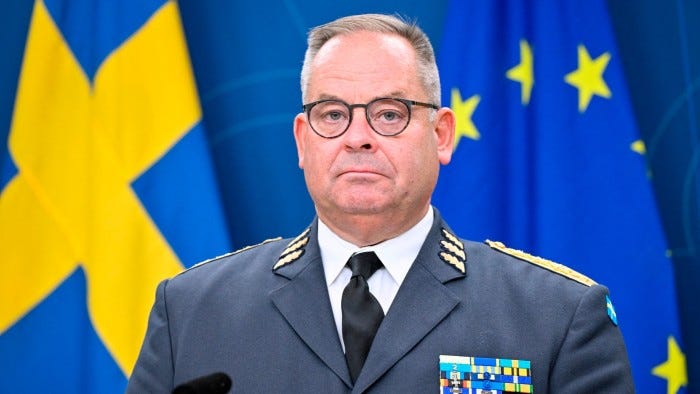
Sweden’s top military official has issued one of the starkest warnings yet about Moscow’s expanding hybrid warfare playbook, calling western political polarisation “a candy shop” for Russian operatives. Michael Claesson, the chief of defence staff, said the Kremlin is increasingly blending sabotage, special operations and targeted attacks with pressure on critical infrastructure and disinformation campaigns designed to fracture Nato unity. Recent rail disruptions in Poland and drone incursions across Europe have only sharpened concerns.
Claesson also flagged Russia’s growing footprint in north Africa, arguing it now controls key trafficking routes for migrants and narcotics — channels that feed instability directly into Europe. As the Ukraine war grinds toward a fifth year, he urged Nato members to streamline defence procurement and abandon rigid “buy European” reflexes, warning there simply isn’t enough domestic production to meet urgent demand. Even the melting Arctic, he noted, carries risks: Russia’s nuclear second-strike assets depend on infrastructure built on thawing permafrost. Moscow, he said, will need “immense investments” to keep its edge. (FT)
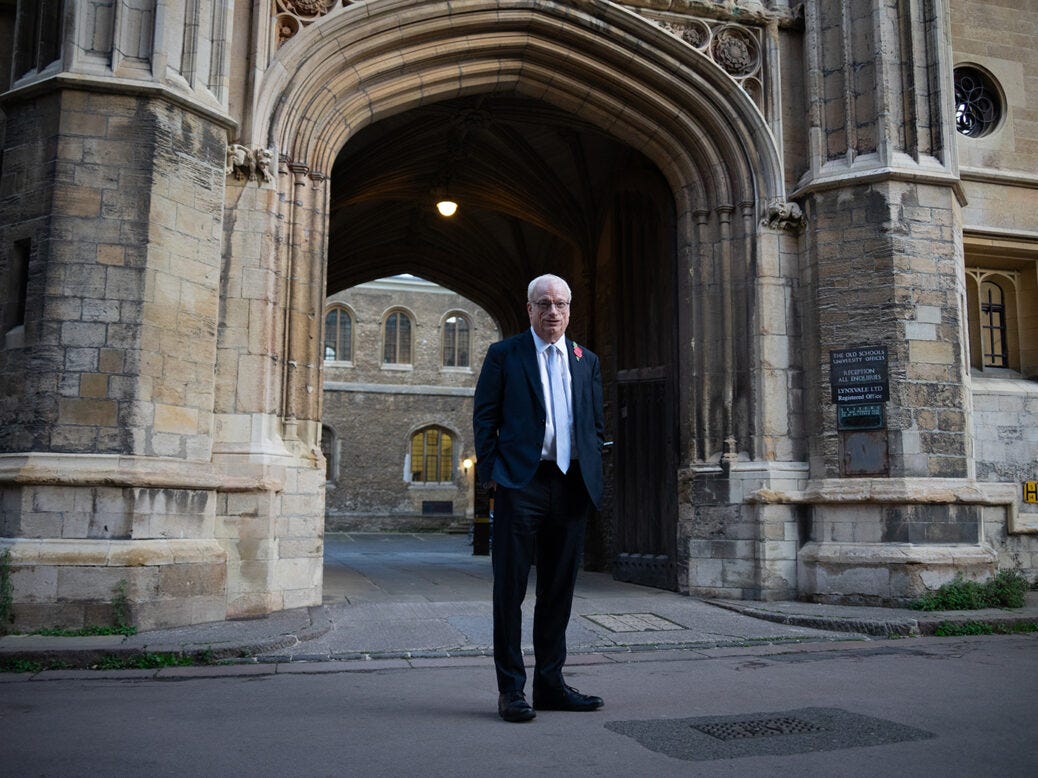
Cambridge’s new chancellor, Lord Chris Smith, used an interview in the New Statesman over the weekend to plant a clear flag: “the defence of academic freedom and freedom of speech” is his “number one concern”. Smith — a New Labour veteran now navigating an era of campus flashpoints — said Cambridge has “hit the national press” too often over speech rows, but insisted that controversial injunctions against protest encampments were justified: the University, he argued, must both “enable and encourage protests” and still “protect the ability of all students to be able to take exams”.
The chancellor threaded a careful line on the campus gender debate. Women-only spaces matter, he said, because women must “feel safe”, but transgender students must have their needs “genuinely met”. On the new women’s society criticised as exclusionary, he added: “It’s not up to the University to tell the people who are creating this society what they should be doing.” Smith defended Kathleen Stock’s right to speak — “I disagree strongly… but I would defend her right to say it” — and warned that academic freedom must be the University’s “bottom line”.
A gold pocket watch that froze at 2:20 a.m., the moment the Titanic slipped beneath the Atlantic, has set a new auction record. The 18-karat piece, owned by Macy’s co-founder Isidor Straus, fetched $2.3 million in Wiltshire on Saturday — the highest price ever paid for Titanic memorabilia, according to Henry Aldridge & Son. Straus and his wife, Ida, were last seen standing arm-in-arm on the deck; his body was recovered weeks later, hers never found. The watch, engraved with Straus’s initials and birthday, wasn’t the only relic drawing bids. A letter Ida penned on Titanic stationery — “What a ship! So huge and so magnificently appointed” — sold for $131,000. The auction house has become the unofficial custodian of Titanic fever, having recently sold other watches, a deck-played violin and passenger letters for similarly eye-watering sums. The Strauses’ devotion remains part of the ship’s mythology, retold in exhibits, memoirs and, most famously, James Cameron’s imagined scene of an elderly couple embracing as the water rises. (NYT)
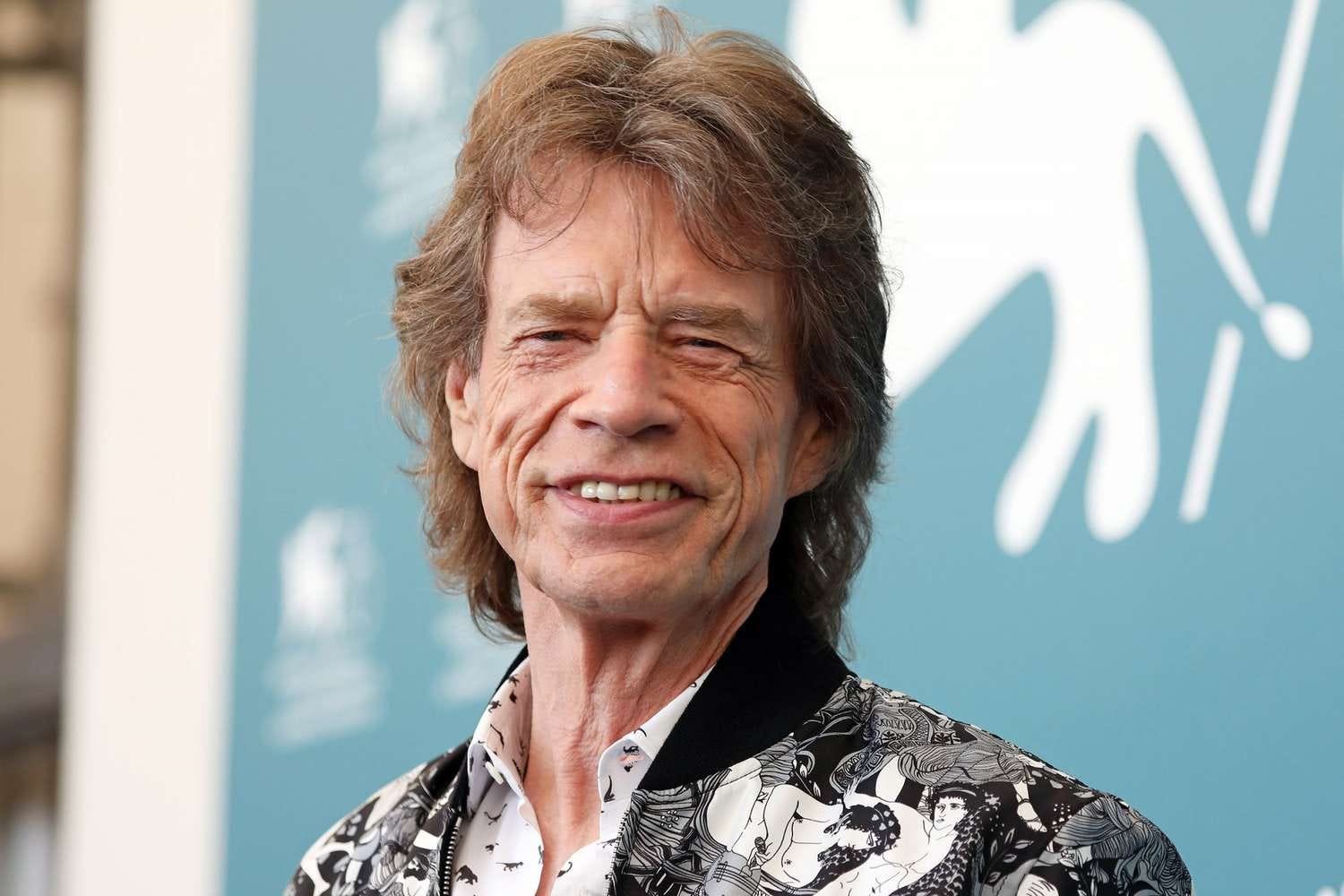
Sir Mick Jagger has revealed the reading habits that keep him almost — but never quite — satisfied. In support of The Sunday Times’ Get Britain Reading campaign, the 82-year-old Stones frontman and his fiancée Melanie Hamrick spoke about life lived between tour buses, school runs and paperbacks. “I read every day,” Jagger said, “mostly at night, when things are quiet.” True to form, he keeps several books on the go: Adam Brookes’s Spy Games; Adam Zeman’s The Shape of Things Unseen; and Nick Lloyd’s The Eastern Front. Hamrick, a retired ballerina and novelist, is a one-book-at-a-time purist — even if she reads them in the sauna, where “the spines are really crumbled.” Both are determined to raise their eight-year-old son, Deveraux, as a reader. Competitions, popcorn-fuelled book-and-film nights, even mild bribery — “horrible,” Hamrick laughs — all seem to work. Jagger, who credits Robinson Crusoe as his first gateway, recalls that books have shaped his songwriting too: Sympathy for the Devil was sparked by Bulgakov’s The Master and Margarita.

A Washington Post piece today explores how near-death experiences — those uncanny, often transformative episodes reported by people on the brink — can permanently reshape a life. As one researcher puts it, NDEs can be “a pretty profound experience, especially if it’s intense,” and the accounts gathered here underscore that. A woman who “floated in black nothingness” during an emergency C-section describes the event as an undercurrent running through her life for more than a decade. Others recall leaving their bodies entirely, or arriving at what felt like a threshold — a tunnel, a landscape, a “gate” — before being told they had to return. The piece also dwells on the aftermath: the difficulty of speaking about something that sounds “woo-woo,” the disorientation of going from “one with the universe” to office meetings, the unexpected grief for a place that felt better than life. Researchers say NDEs can upend belief systems, deepen empathy, and even quell the fear of death. As one survivor says, “The person that I was… did die. Somebody else came back.”